B-Carotene Molecule
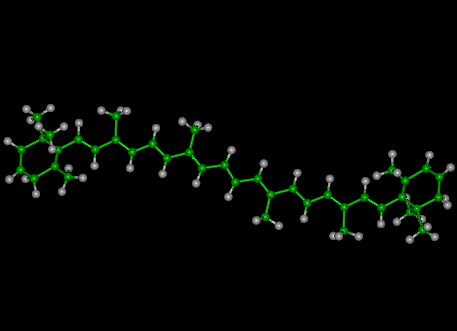
B-Carotene Molecule Ball-and-Stick Model
To View the B-Carotone Molecule in 3D --->>in 3D with Jsmol
Beta-carotene is the molecule that gives carrots their orange color. It is part of a family of chemicals called the carotenoids, which are found in many fruit and vegetables, as well as some animal products such as egg yolks. Carotenoids were first isolated in the early 19th century, and have been synthesized for use as food colorings since the 1950s. Biologically, beta-carotene is most important as the precursor of vitamin A. It also has antioxidant properties and may help in preventing cancer and other diseases although much controversy continues in this area (see below).
Carotene plays a crucial role as a photosynthetic pigment, important for photosynthesis. . It does not actively contribute in photosynthesis, but instead it transmits the energy it absorbs to chlorophyll and also plays a protective role for chlorophyll being a powerful antioxidant that protects organic molecules from being destroyed by oxidation.
Carotene is the dimer of vitamin A and comes in two forms alpha and Beta-carotene. Both types can be stored in the liver, and unlike vitamin A, excess carotene is non-toxic and can also be converted to vitamin A as needed.

Structure of Beta-Carotene
Beta-carotene is one of over 500 of the carotenoid family. These substances form the coloring pigments for deep yellow, orange and dark green fruits and vegetables.
In its natural form, beta carotene can be found in strawberries, cantaloupe, broccoli, squash, sweet potatoes, carrots, etc.Beta Carotene is believed to act as an antioxidant and an immune system booster. Other members of the antioxidant carotenoid family include cryptoxanthin, alpha-carotene, zeaxanthin, lutein, and lycopene. However, unlike beta-carotene, these nutrients are not converted to vitamin A in significant amounts.
Although beta-carotene supplements are widely available commercially, the preferred form is that found in fresh fruits and vegetables. There have been conflicting reports on the effectiveness of beta-carotene supplements with some research findings that the supplements may even increase the risk for some cancers; studies have shown that synthetic beta-carotene increased the incidence of lung cancer and those exposed to asbestos.
There are many types of antioxidants, and they do different kinds of work. What marketers of supplements never tell you is that not all of it is good work. Antioxidants can certainly deactivate free radicals in a test tube, but in the human body they can sometimes have the opposite effect—acting as prooxidants (see below) instead of antioxidants. That's what the two beta carotene studies showed.
Published in 1996, the CARET study (full name: Beta Carotene and Retinol Efficacy Trial) tested beta carotene and vitamin A supplements in people at high risk for lung cancer—smokers, former smokers, and asbestos-industry workers. The study was halted when it became clear that those taking beta carotene (not even a high dose—just 30 milligrams a day) actually had a higher rate of lung cancer and higher mortality rate than those taking a placebo. The investigators found that B-carotene can turn into a pro-oxidant or form oxidized by-products, particularly if adequate amounts of vitamins C and E aren't present. It's well known that C and E work together to produce their antioxidant effect. Recent research strongly suggests that these vitamins can also help limit the oxidation of beta carotene and/or recycle it after it is oxidized, so that it won't damage cells. (In fact, any antioxidant can become a pro-oxidant under certain conditions in the body—especially if other antioxidants are lacking, since they protect one another from oxidation.)
It's better to get beta carotene from food (carrots, spinach, cantaloupe, etc.) than from pills. There has never been any evidence that the beta carotene in foods poses any danger, perhaps because it comes with many other plant chemicals that all work together. In fact, virtually every study shows that foods rich in beta carotene help keep people healthy—and even reduce the risk of lung cancer.