|
The Pinene Molecule |
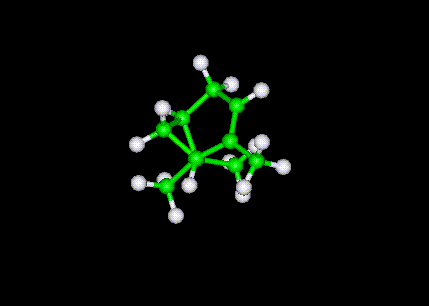
Turpentine is a semifluid resin composed primarily of different types of turpenes. obtained from trees, mainly pines of the genus Pinus. A volatile oil called spirit of turpentine, oil of turpentineor, colloquially, turps can be extracted by distillation. Turpentine has been described simply as "distilled trees".
Turpentine is sometimes called acquaragia; cf aqua regia.
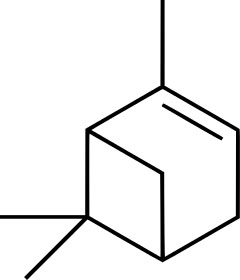
Chemical Structure of the Pinene (turpentine) molecule
Monoterpenes such as pinene contribute to the smell of the forest and also to the smell of some fruits. They are made up of carbon and hydrogen and sometimes also contain oxygen. Many of them have very descriptive names, for example, limonene and pinene. They are produced most actively when the Sun rises on warm days and can either be stored or released directly into the air. Production of the compounds rises if the plant is stressed.
Medicinal uses
Turpentine has been used medically since ancient times.
- Applied externally to the affected areas, turpentine is a highly effective treatment for lice.
- Turpentine can be mixed with animal fat as a primitive chest rub for nasal and throat complaints. Some modern chest rubs still contain some turpentine (e.g., Vick's Vaporub).
- Internal administration of turpentine is no longer common today, though it was once the preferred means of treating intestinal parasites.
Industrial uses
Turpentine is used as a solvent, especially for thinning oil-based paints (althugh ithas now been replaced by modern sprits) and as a raw material for the chemical industry..
Solvent Molecules